How Vent Layout Influences The Dryer Vent Cleaning Tools You Use
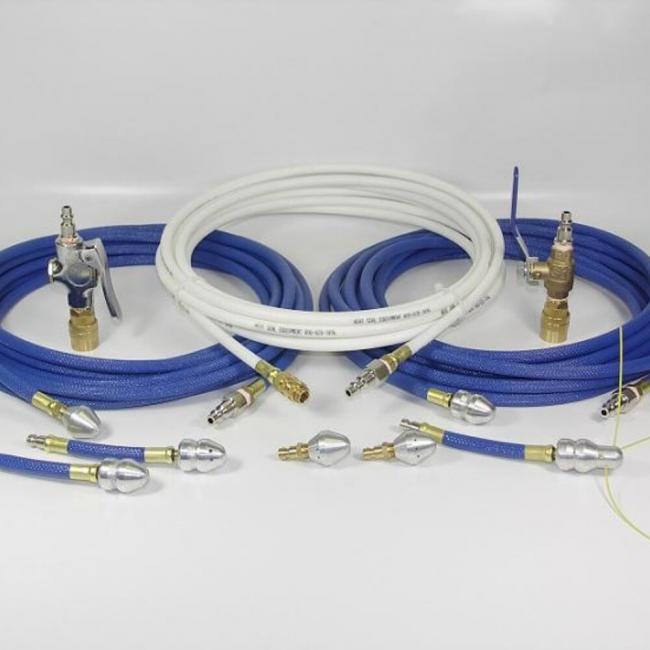
Each dryer vent is different, and adopting a one-size-fits-all approach to cleaning them can lead to less than satisfactory results. While you need a few essential tools for success, the effectiveness of the job will depend heavily on the layout of the duct you are working on.
Whether it is a straight run or a vent with multiple elbows or vertical drops, each scenario presents its own unique airflow challenges, which can be safely tackled with the correct choice of tools and techniques. All you need to know is when to use each type of vent for a specific purpose.
Heat Seal Equipment Ltd., the leading supplier of all kinds of dryer vent cleaning tools and accessories in Ontario, can help you with that. In this blog, we will show how dryer vent runs influence tool choice.
Choose The Right Dryer Vent Cleaning Tools For Each Vent Type
Straight runs might seem easy, but do not be fooled. On the other hand, elbows or turns might seem complex, but they can be handled with the right equipment. Let us show how to match the dryer vent cleaning tools you use to the vent’s layout.
Straight dryer vent runs: Deceptively simple
When compared to vents with vertical drops or elbow bends, straight vents are definitely the easiest and fastest to clean. Their straight structure allows for the maintenance of strong airflow, which in turn enables the smooth movement of accumulated lint towards the exhaust point. However, these vent types are not common. They are mostly found in new homes or in buildings where the dryer is located next to an exterior wall.
Cleaning considerations
Before you begin cleaning this type of vent, consider the following factors:
- Lint buildup is likely to be even throughout the length and breadth of the duct
- Air-powered tools will help you clean the vent with minimal resistance
- A low PSI is sufficient to clean the entire duct in an effective manner
Best approach
You do not need very high-powered dryer vent cleaning equipment or aggressive agitation tools for straight ducts. Controlled air-driven devices suffice. With steady airflow, you can effectively push out lint. In fact, overpowering your machine might lead to compacted lint at the exit.
Pro tip: Do not be complacent and skip inspections when cleaning straight ducts. Any missed obstruction can compromise results.
Elbows and turns: Challenging at every bend
Airflow resistance increases with every elbow and turn, which means lint is highly likely to accumulate at every transition point. More so at 90-degree bends, as their rigidity makes it harder to move compacted lint. The sad news is that this is the most common vent type, often found in several homes.
Cleaning considerations
For vents with elbows and tuns, you should keep the following in mind:
- Bends are likely to contain the most build-up
- The risk of tools rebounding is high
- You must control air pressure carefully
Best approach
We recommend flexible and controlled cleaning tools for this vent type. Gradually adjusting airflow is critical in preventing damage to delicate duct walls. Fortunately, it is also an effective strategy to loosen and evacuate lint buildup.
Pro tip: Never apply too much air pressure, as it can cause the walls of a duct to rip.
Vertical drops: The effect of gravity
From condos to multi-story homes, vertical drop vents are a common fixture in Ontario. Cleaning them can be difficult as you have to work against gravity to extract compacted lint at the bottom.
Cleaning considerations
Remember, vertical drops are prone to the following:
- Compaction of lint at the bottom of the drop
- Greater degree of moisture accumulation
- Airflow loss due to the length of the duct
Best approach
Using tools that allow you to modify airflow is the best course of action. With patience and controlled airflow, you can implement incremental cleaning to get all the build-up out without gravity forcing it back down.
Pro tip: Always be thorough, as chances of incomplete cleaning are high when gravity works against you in vertical runs.
Conclusion
All dryer vents may look the same from the outside, but their internal layouts can be vastly different. Hence, you need to be mindful of the dryer vent cleaning tools and techniques you use. By matching both, you can guarantee the cleanest results.
Heat Seal Equipment Ltd. provides advanced dryer vent cleaning equipment in Ontario. Our wide range of tools can effectively tackle the complexities of any vent type. Contact us to get your hands on our pro-grade supplies.
FAQs
Can vertical dryer vents be cleaned from only a single access point?
We recommend using both ends to clean them as it guarantees the most effective results.
Are the chances of fire higher in longer duct runs?
Yes, because longer vents tend to accumulate more lint, which drastically reduces airflow efficiency.
Is it necessary to conduct airflow testing before and after cleaning?
Yes, we strongly recommend doing so as it can help you verify the effectiveness of your cleaning efforts.